
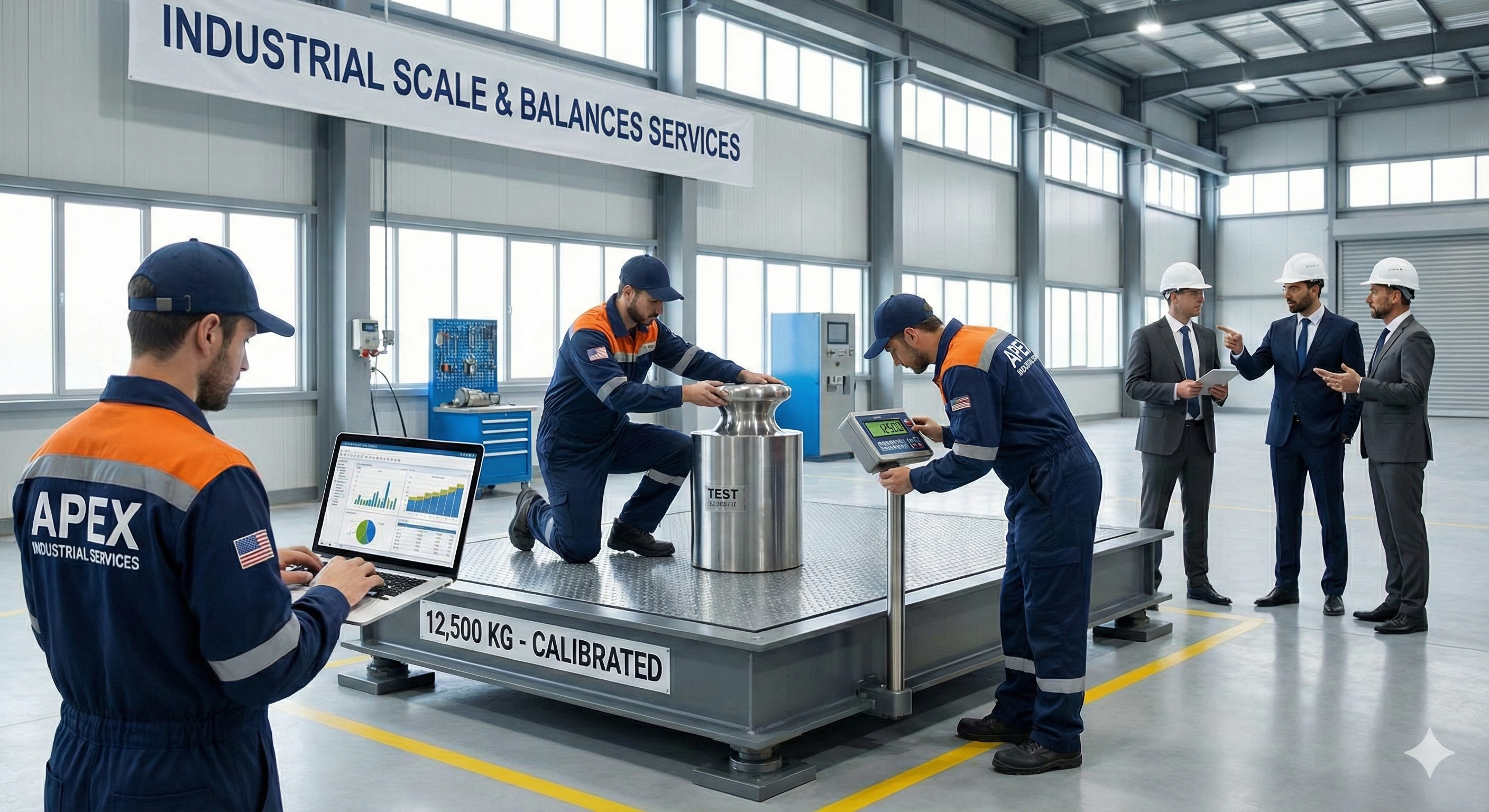
Mergers & Acquisition Trends in the Industrial Weighing Sector
Owners of industrial weighing and scale businesses are facing a pivotal moment: with consolidation heating up in the sector, many smaller and mid-market companies are becoming acquisition targets. In this article, we’ll unpack why this is happening (and how), explore recent deals, and discuss what owners should be doing right now if “selling a scale and balances company” is on their horizon.
The Big Picture — Industry Drivers for Consolidation

Owners of industrial weighing and scale companies are watching a wave of consolidation sweep through their sector. What was once a highly fragmented landscape—filled with dozens of regional dealers, service businesses, and specialty manufacturers—is now drawing interest from national strategics, global OEMs, and private equity investors. Several forces are converging at once, and together they explain why mid-market firms have suddenly become prime acquisition targets.
Market Growth and Technology Trends in the Industrial Weighing Sector
The global industrial weighing industry has always been steady, but in recent years it has become strategically important for companies operating in logistics, manufacturing, energy production, and food processing. Modern supply chains rely on precise, integrated weighing systems capable of feeding real-time data into automation platforms. As a result, buyers aren’t simply acquiring scale companies; they are acquiring the technology backbone needed for Industry 4.0 operations.
Advances in automation, IoT-enabled sensors, and cloud-connected monitoring systems are raising the value of companies that can deliver both equipment and ongoing service. Many mid-market businesses—especially those with decades in the field—have deep customer relationships and recurring maintenance contracts that make them especially attractive. For buyers, these firms provide a ready-made platform for expanding into digital weighing solutions without building the capabilities from scratch.
Why Consolidation Now?
Manufacturing and industrial services have been consolidating for more than a decade, but several recent shifts have accelerated interest in the weighing sector specifically. Labor shortages are forcing many industrial clients to lean more heavily on automation and precision systems. Supply chain pressure has increased the demand for scale accuracy, uptime, and regulatory compliance. And with global logistics becoming more data-driven, weighing systems are now considered part of a company’s digital infrastructure rather than a standalone tool.
This shift makes the acquisition of a mid-market scale or balances business particularly compelling. Buyers see an opportunity to combine multiple regional operations into a single, nationwide platform with unified technology, standardized service offerings, and greater purchasing power. In other words, the market’s fragmentation—once a challenge—is now an opportunity, and the buyers with capital are moving quickly.
Across all of these factors, the core theme is clear: consolidation is rising because weighing systems are no longer optional industrial equipment. They’re becoming integrated, mission-critical components of a modern operation. That’s why buyers searching for growth are suddenly focused on selling a scale and balances company—or more accurately, acquiring one.

Why Mid-Market Scale & Balances Companies Are Attractive Targets
As consolidation accelerates, one pattern stands out: mid-market industrial weighing companies—often family-owned or regional operators—are seeing the most active buyer interest. These firms sit at the intersection of expertise, service capability, and customer trust, creating a combination that buyers struggle to replicate organically. That’s why many acquisition searches specifically target mid-sized companies when evaluating opportunities in the weighing and measurement sector.
Niche Expertise, Recurring Revenue, and Aftermarket Strength
Most mid-market weighing companies have built their reputation on specialized applications and hands-on service. Whether serving manufacturing lines, logistics hubs, food processors, or heavy-industry clients, these firms understand the operational realities of their customers in a way larger corporations often struggle to match.
What truly boosts valuation, however, is the recurring revenue tied to calibration, maintenance, repairs, and certifications. Many companies in this sector generate 30–50% of revenue from service. Buyers love this because it creates predictable cash flow and deepens customer relationships. These service programs also lead to long equipment lifecycles, frequent replacement cycles, and strong aftermarket parts sales—exactly the sort of revenue mix private equity and strategic acquirers look for when evaluating platform opportunities.
Turnkey Value for Buyers Seeking Rapid Expansion
Mid-market scale companies also offer one of the most valuable assets in any industrial service business: established, long-standing customer relationships. Many of these businesses have decades of trust built into the brand—trust that doesn’t appear on a balance sheet but drives significant deal activity.
For buyers, acquiring a mid-sized firm often provides:
- A trained and certified technical workforce
- A built-out service schedule and revenue pipeline
- Local market credibility
- A fully operational calibration lab and service infrastructure
Building these capabilities organically requires years of effort and significant investment. Acquiring a company that already has them allows buyers to enter new geographic markets or verticals immediately.
Filling Strategic Gaps in a Fragmented Industry
Despite the industry’s importance, it remains highly fragmented. Thousands of regional service providers and independent scale dealers operate across the United States. For strategics and private equity, this fragmentation is exactly what makes the sector ripe for roll-ups. Mid-market firms often occupy the “sweet spot”: large enough to have scale, systems, and an established brand—yet small enough that a larger buyer can integrate them smoothly into a broader platform.
That’s why so many buyers are actively researching selling a scale and balances company from the other side of the table—they’re mapping out acquisition targets that can help them capture more of the aftermarket, expand their geographic footprint, and upgrade customers to more advanced, connected weighing technologies.
Illustrative Recent Transactions

Digging into real deal activity helps clarify what’s happening in the market for selling a scale and balances company. The following transactions show how buyers are prioritizing service, technology, and footprint expansion.
Acquisition of Kanawha Scales & Systems (KSS) by Investcorp
On November 13 2025, Investcorp announced its acquisition of Kanawha Scales & Systems (KSS) from American Equipment Holdings (AEH), a portfolio company of Rotunda Capital Partners. (Investcorp). KSS is a leading U.S. provider of calibration, maintenance, and repair services for complex industrial weighing systems and automated control solutions. (Investcorp Capital)
Key take-aways for owners:
- The buyer (Investcorp) is clearly focused on service/after-market revenue rather than merely equipment manufacturing.
- The deal features an Employee Ownership Plan (EOP) for all employees with at least a year’s service—highlighting the internal value placed on continuity of service culture. (Investcorp)
- The seller (AEH) already had a service-heavy business, suggesting the aggregation of complementary service companies is a live strategy.
Acquisition of Thompson Scale Company by A&D Engineering, Inc. (via A&D HOLON Holdings Co., Ltd.)
Effective October 1 2025, A&D Engineering (a subsidiary of A&D HOLON) acquired the business of Thompson Scale Company in North America. (A&D Holon) Thompson Scale, founded around 1972 in Houston, is a manufacturer of checkweighers and filling/packaging equipment. (Thompson Scale Company)
Strategic rationale:
- The acquirer emphasized global engineering capabilities and leveraging Thompson Scale’s North American customer base to expand its inspection and weighing solutions footprint. (A&D Holon)
- This deal highlights how equipment-manufacturing businesses with complementary technology are attractive targets (not just service businesses).
- For owners, it underscores that even firms focused on production equipment (rather than service) may find themselves in the crosshairs of consolidation if they offer integrated value-streams.
Reynolda Acquires Carlton Industrial Solutions
In August 2024, Reynolda — a leading private equity group — acquired Carlton Industrial Solutions, a long-established provider of industrial weighing, calibration, repair, and automation services. (Reynolda Equity Partners).
The strategic rationale included:
- Providing Reynolda a strategic platform on which it could do a roll-up
- Bolstering technical service offerings
- Adding recurring service and installation capabilities
A month later, Paul Fackler, Managing Director at Jackim Woods & Co., represented a large-scale business in its sale to private equity-backed Carlton Industrial Solutions in September 2024.
These transactions demonstrates that scale companies with adjacent industrial services often command strong buyer interest and attract other smaller scale firms seeking liquidity. Together, these transactions and others, reflect a robust and growing market for high-quality scale and balances companies.
Common Patterns and Emerging Themes

From these transactions, several consistent themes emerge for mid-market scale or balance companies being acquired:
- Service/after-market revenue matters: The KSS deal emphasizes calibration/maintenance as a core value driver.
- Technology/automation integration: With Thompson Scale, the manufacturing target offered inspection and packaging integration—a sign that buyers value smart equipment, not just raw scales.
- Geographic expansion: Buyers are using acquisitions to expand their footprint (North America in the Thompson Scale case) or strengthen U.S. service coverage (in the KSS case).
- Platform or roll-up strategy: Many buyers appear to be engaged in “buy-and-build” strategies—acquiring a mid-market company with solid fundamentals, then layering in additional units or leveraging scale.
- Owner-operated to buyer-operated transition: In many cases the original management remains or transitions into the new ownership—this reduces disruption and preserves value.
For owners considering a sale, these trends suggest preparing to speak in the language of “service recurring revenue,” “technology integration,” “geographic scale,” and “platform potential.”
What Owners of Industrial Weighing Firms Should Do Now
With consolidation accelerating and buyers actively seeking mid-market scale and balances companies, owners who want to maximize value should begin preparing long before they formally go to market. A well-run industrial weighing business is worth a premium—but only when the fundamentals are clear, documented, and positioned in a way that speaks to what buyers are actually paying for today. The following steps can help owners strengthen their companies and improve outcomes when the time comes to explore a sale.
Strengthen and Showcase Recurring Revenue
Service has always been at the heart of the weighing industry, but in today’s M&A environment, recurring revenue is one of the most important drivers of valuation. Buyers look for businesses with predictable, contract-driven income from calibration, preventive maintenance, repairs, certifications, and equipment lifecycle replacement.
Owners can take several practical steps:
- Formalize service agreements if they’re currently informal or verbal.
- Track service revenue separately from installation or equipment sales.
- Document renewal rates and maintenance schedules.
- Highlight long-term customer relationships and multi-location contracts.
Even modest increases in recurring revenue can have an outsized impact on valuation, especially for buyers pursuing buy-and-build strategies in the industrial services sector.
Prepare Clean, Defensible Financials
When you start selling a scale and balances company, buyers will focus their attention to the numbers. Clear, organized, and accurate financials speed up diligence and reduce deal risk—both of which improve the odds of securing a strong offer.
Owners should expect buyers to examine:
- Revenue mix (service vs. equipment vs. parts)
- Margin trends over the last 3–5 years
- Customer concentration
- Technician utilization and labor efficiency
- Recurring versus project-based revenue
- Inventory management and parts turnover
It’s also wise to work with a CPA to tidy up discretionary expenses, normalize EBITDA, and address any accounting irregularities before entering a sale process.
Highlight Technical Capabilities and Technology Integration
Even businesses that focus primarily on mechanical weighing systems should document their technological strengths. Buyers are increasingly looking for companies that can install or service:
- IoT-enabled weighing systems
- Integrated automation or control systems
- Data-logging or cloud-connected monitoring platforms
- High-precision or specialty instruments tied to regulated industries
When owners position their businesses as “technology-forward” rather than “equipment-centric,” they tap into a much larger universe of buyers—many of whom pay premium multiples for firms supporting Industry 4.0 environments.
 Document Customer Relationships and Operational Processes
The industrial weighing industry still runs on trust. Many customers have relied on the same scale service company for decades. Buyers want reassurance those relationships will continue after a transaction.
Owners can increase their company’s attractiveness by documenting:
- Key accounts, service history, and contract terms
- Multi-site or multi-facility arrangements
- Renewal cycles
- Industry-specific expertise (food, manufacturing, logistics, pharma, etc.)
- Service routes and technician assignments
Similarly, documenting standard operating procedures—everything from calibration workflows to inventory management—helps buyers visualize a smooth post-closing transition.
Understand Buyer Profiles and Motivations
Different buyers value different aspects of a scale or balances business:
Strategic buyers often focus on geographic expansion, service coverage, and technology integration. They are typically the most efficient post-closing operators.
Private equity buyers look for service-heavy revenue, a strong management team, and the ability to complete additional add-on acquisitions. These buyers frequently create the highest competition because they are deploying capital in pursuit of a long-term roll-up strategy.
Large OEMs or global industrial firms may target companies with unique product lines, strong calibration labs, or expertise in highly regulated industries.
When owners understand these motivations, they can tailor their story and materials to match what buyers are seeking.
Timing the Market: Why Now Matters
 Broader industry trends also play a role. Modern manufacturing, logistics, and food processing rely heavily on precise measurement and automated systems. At the same time, many weighing companies founded in the 1970s and 1980s are approaching generational transition. This combination—industry demand rising while owners approach retirement—creates the perfect environment for consolidation.
From a timing standpoint, owners benefit when:
- Service revenue is strong and growing
- Technicians are fully staffed or cross-trained
- Contracts are secure
- Major equipment investments or system upgrades are documented
- The company has shown stable performance across multiple economic cycles
Well-prepared businesses entering the market now are encountering active buyers, favorable industry tailwinds, and strong acquisition demand.
Summary
Key Takeaways for Owners of Industrial Weighing Companies
- Mid‑market industrial scale and balances companies are increasingly attractive M&A targets due to service revenue, technology integration, and geographic footprint.
- Recent transactions, including Kanawha Scales & Systems and Thompson Scale, highlight trends in service, platform acquisitions, and global expansion.
- Buyers value recurring revenue streams, strong customer relationships, and companies that can be integrated into a larger operational platform.
- Owners should prepare for sale by strengthening operations, documenting contracts, and highlighting technology and service capabilities.
- Understanding buyer motivations and market trends can significantly improve valuation and timing for an exit.
Conclusion
Consolidation in the industrial weighing industry is not just a passing trend—it’s a strategic shift. Companies that are well-prepared, financially transparent, and technologically adept are in a prime position to attract high-quality buyers and command premium valuations. By understanding the patterns in recent transactions and taking proactive steps, owners can maximize the value of their business while ensuring a smooth transition.
About Jackim Woods & Company
Jackim Woods & Company is a boutique mergers and acquisitions firm that specializes in representing business owners in lower-middle-market transactions. The firm provides valuation services, targeted buyer outreach, and expert guidance throughout the sale process. Learn more about our scale and balances sector services.
To discuss valuation options, exit strategies, or the sale of your industrial weighing business, for a confidential consultation.

Paul Fackler, Managing Director, pfackler@jackimwoods.com

Rich Jackim, Managing Partner, rjackim@jackimwoods.com
