
The CDL Mill Crackdown: What It Means for the Industry’s Future
The CDL Mill Crackdown: What It Means for Trucking, Safety, and the Industry’s Future
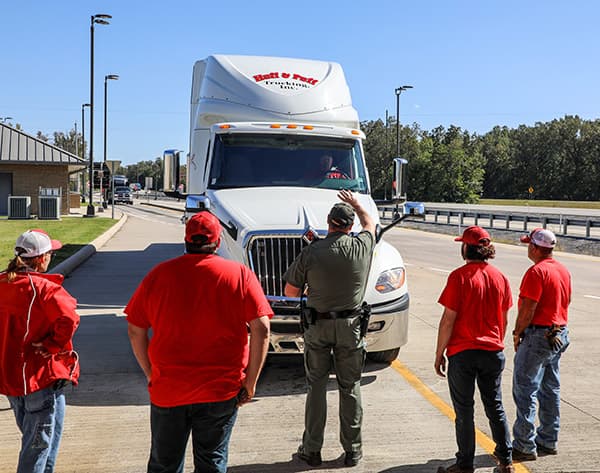
In February 2026, federal investigators fanned out across all 50 states in one of the most aggressive enforcement actions the trucking industry has ever seen. Over the course of just five days, the Federal Motor Carrier Safety Administration deployed more than 300 investigators and conducted over 1,400 on-site sting operations targeting commercial driver’s license (CDL) training schools. The results were striking: 448 schools received formal notices of removal for failing to meet basic safety standards, and 109 others voluntarily withdrew from FMCSA’s national Training Provider Registry the moment they learned investigators were on their way. Another 97 remain under active investigation.
 Combined with earlier enforcement waves — including the removal of nearly 3,000 providers in December 2025 and another 3,800 in January 2026 — FMCSA has now purged more than 7,000 CDL schools from its registry since 2025. To put that in context, the registry listed roughly 40,000 training providers before the crackdown began, meaning the purge has touched nearly one in five listed schools. It’s worth noting that many of the first wave of removals were inactive operators — school districts, community colleges, and small fleets that had registered but hadn’t trained a driver in years. The February 2026 sting was more significant precisely because it targeted active operators who were actively credentialing drivers. Transportation Secretary Sean Duffy framed it plainly: “For too long, the trucking industry has operated like the Wild, Wild West.”
He’s not wrong. And from an investment banker’s perspective, the scale of the problem these actions are addressing is even larger than the headlines suggest.
What CDL Mills Actually Are
A CDL mill is a training provider that collects tuition fees, issues completion certificates, and does little else of value. Investigators found schools operating out of fake addresses, using unqualified instructors, training students on vehicles that didn’t match the license class being sought, and in many cases simply selling passing scores to anyone who could pay.
The documented fraud runs deep. Between 2001 and 2025, DOT Office of Inspector General investigations conservatively estimated that over 6,000 fraudulent licenses were issued to drivers who couldn’t operate the vehicles they were credentialed to drive. In Massachusetts, a former State Police sergeant ran a scheme for years, arranging passing scores for dozens of applicants he privately described as “brain dead” and people who “should have failed about 10 times already” — and the scheme continued operating for more than a year after federal Entry-Level Driver Training rules went into effect in 2022. In Louisiana, a federal grand jury indicted multiple state motor vehicle employees for bribery. In Florida, a Russian-language trucking school charged students up to $5,000 for guaranteed CDLs, complete with covert cameras and wireless earpieces to feed answers during tests.
These weren’t isolated incidents. They represent a market that grew precisely because it was profitable and, for years, essentially unpoliced. From 2022 through 2024, despite widespread complaints, FMCSA removed only four providers from the registry under routine enforcement — three of those for emergency-level violations. The self-certification model that governed CDL training was, in practice, an honor system with no honor.
The Economic Damage Is Real and Measurable
For those of us who work in transportation M&A, the downstream consequences of this fraud show up directly in deal economics — and they are not small.
Experior Logistics
Insurance costs have spiraled industry-wide. The trucking sector has absorbed dramatic liability premium increases over the past decade, driven in significant part by large jury verdicts tied to crashes involving undertrained drivers. Primary liability insurance for owner-operators running under their own authority now reaches $14,000 to $22,000 annually per truck — a cost structure that pressures margins and makes capital formation harder for smaller carriers. When a carrier unknowingly hires a driver whose credentials were purchased rather than earned, it inherits catastrophic liability exposure that may not surface until a fatal accident triggers litigation.
The accident data is damning. In 2023, over 153,000 highway truck accidents resulted in more than 5,400 fatalities — a 40% increase from 2014 levels. The odds of being killed by a commercial truck are now roughly 20 times greater than dying in a commercial airline crash, a disparity that reflects the vast difference in training standards between the two industries. In Fort Pierce, Florida, a driver who could neither speak nor read English obtained a fraudulent CDL and subsequently killed a family of three. In California, a driver whose license was obtained through a bribery scheme triggered a 74-vehicle pileup that killed two people and injured 51 others.
The “driver shortage” narrative was partly manufactured. The Owner-Operator Independent Drivers Association has argued forcefully that CDL mills fueled a “destructive churn” built on a false narrative of a nationwide truck driver shortage. Rather than addressing retention problems and working conditions, some carriers and training operators chose to flood the market with undertrained, low-cost labor — depressing wages for qualified professional drivers and distorting the supply-demand dynamics that buyers and sellers need to accurately price risk. For anyone underwriting a trucking acquisition, a workforce seeded with paper drivers represents unquantified liability hiding in plain sight on the balance sheet.
Valuation integrity was compromised. When a carrier’s safety rating, claims history, and insurance profile reflect the consequences of fraudulent driver credentialing, it directly impairs enterprise value — often in ways sellers themselves don’t fully understand until a buyer’s diligence team starts pulling driver qualification files.
Why the Enforcement Action Is Genuinely Good News
The federal crackdown is disruptive in the short term. Some legitimate drivers trained at now-decertified schools face credentialing complications. Some carriers will need to requalify portions of their workforce. These are real costs.
But the long-term benefits are substantial — and they flow to every honest participant in the industry.
For consumers and the public, the benefit is direct: fewer undertrained drivers on the road means fewer preventable deaths. Enforcement finally aligns regulatory action with a decade of worsening accident statistics.
For employers and carriers, a cleaner training registry reduces the risk of unknowingly inheriting fraudulent credentials. It also strengthens the defensibility of hiring decisions in litigation — a factor that matters enormously when nuclear verdicts can exceed policy limits by multiples. Carriers that have invested in rigorous training pipelines will find those investments increasingly rewarded in both insurance pricing and competitive differentiation.
For the industry’s investment profile, regulatory clarity and improved safety metrics will gradually reduce the liability discount that buyers and insurers apply to trucking assets. Lower accident frequencies, cleaner CSA scores, and a more professionalized driver workforce all improve the risk-adjusted attractiveness of transportation businesses. A cleaner registry should also help normalize insurance markets distorted by years of adverse loss experience — ultimately lowering the cost of capital across the sector.
For legitimate training providers, the removal of competitors who were undercutting the market on price while externalizing costs onto the public restores competitive balance. Schools that invested in qualified instructors, proper equipment, and genuine curricula can now compete on a level playing field.
The Bottom Line
CDL mills are fraud enterprises that monetized a regulatory blind spot while transferring enormous costs onto the public, onto legitimate industry participants, and onto the victims of preventable crashes. The scale of the federal response — more than 7,000 schools removed or flagged out of roughly 40,000 registered providers — reflects how thoroughly that blind spot was exploited.
For investors, buyers, and sellers in the trucking space, the era of treating driver credentialing quality as a back-office compliance matter is over. The cleanup is long overdue. And while the short-term disruption is real, the foundation being laid is one that serious operators, acquirers, and lenders should welcome.
Thinking About Buying or Selling a CDL Training Business?
 The regulatory reset underway in the CDL training sector is creating real M&A opportunity — but navigating it requires an advisor who understands both the industry dynamics and the deal mechanics.
At Jackim Woods & Co., we bring deep expertise in transportation services M&A to every engagement. We understand how FMCSA compliance history, Training Provider Registry status, student completion rates, and instructor credentialing translate into enterprise value — and how buyers and lenders are pricing those variables right now. For sellers, that knowledge means positioning your business to command the best possible outcome in a market that is actively rewarding well-run, compliant operators. For buyers, it means identifying acquisition targets with clean regulatory profiles and durable competitive advantages before the broader market catches on.
The shakeout created by federal enforcement is far from over. Owners of legitimate, compliant CDL training businesses may find that this is an exceptional time to explore a sale, recapitalization, or strategic partnership. Acquirers looking to build scale in a consolidating market have a narrowing window to act before valuations fully reflect the new competitive landscape.
Whether you are a CDL school owner weighing your exit options or a strategic buyer looking to enter or expand in the training sector, we would welcome the opportunity to discuss what your business is worth and what the market looks like today.
Contact us for a free, no-obligation conversation.
Rich Jackim, Managing Director Jackim Woods & Co. www.jackimwoods.com
Rich Jackim is Managing Director of Jackim Woods & Co., a lower middle market M&A advisory firm, and author of The $10 Trillion Opportunity. The firm advises owners and acquirers across transportation, distribution, and business services.
